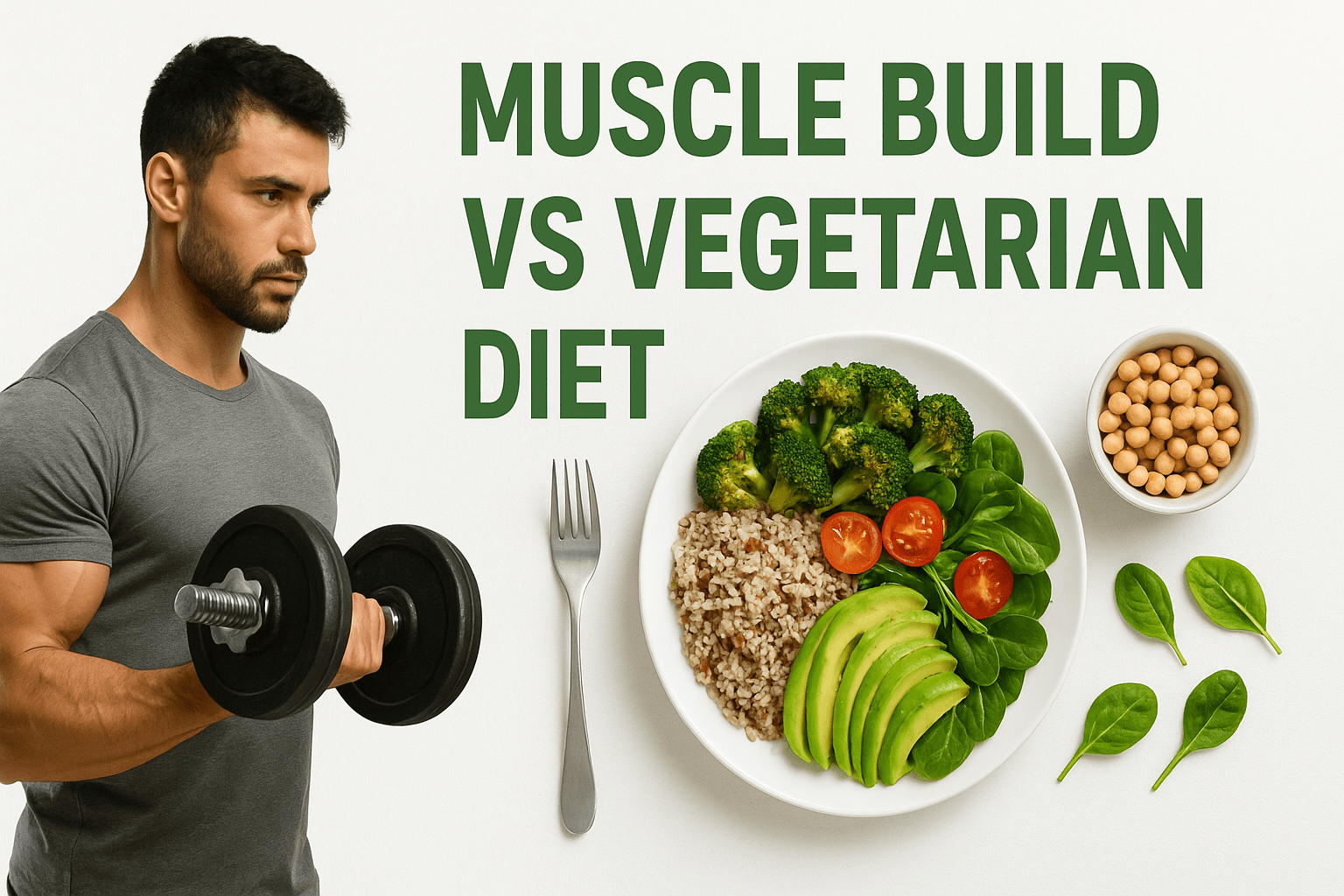
Building muscle and following a vegetarian diet are often seen as conflicting goals but is that really the case? For decades, people have associated muscle building with meat-heavy diets rich in chicken, fish, and eggs. However, a growing body of research and real-world examples show that vegetarians can build lean muscle just as effectively with the right nutrition strategy.
In this article, we’ll explore the science behind muscle building and vegetarian diets, compare the nutritional differences, and reveal how plant-based eaters can achieve impressive strength and size gains.
Understanding Muscle Building Basics
Muscle growth, also known as hypertrophy, occurs when the body repairs muscle fibers after resistance training. The key drivers are
- Protein intake – essential for repairing and building muscle tissue.
- Caloric surplus – consuming more calories than your body burns.
- Progressive overload – increasing the intensity of workouts over time.
- Rest and recovery – allowing muscles time to repair and grow stronger.
Traditionally, animal-based diets have been favored due to their complete proteins sources containing all nine essential amino acids. However, vegetarians can still achieve these nutritional needs with smart food combinations and supplementation.
Vegetarian Diet and Muscle Growth: Breaking the Myth
Contrary to popular belief, a vegetarian diet does not limit muscle growth. Studies published in the Journal of the International Society of Sports Nutrition show that plant-based athletes can build muscle mass comparable to meat-eaters when total protein intake is matched.
Key Plant-Based Protein Sources
- Lentils and chickpeas – around 18g of protein per cup
- Tofu and tempeh – 20g of protein per serving
- Quinoa – a complete protein with 8g per cup
- Nuts and seeds – healthy fats plus 5–10g protein per handful
- Plant-based protein powders – pea, soy, or rice protein to fill the gap
The secret lies in combining complementary proteins, such as rice and beans, to ensure all essential amino acids are covered.
Muscle Build Diet: The Traditional Meat Approach
A traditional muscle-building diet typically emphasizes animal protein, which offers high bio availability and amino acid completeness
- Chicken breast – 31g protein per 100g
- Beef – 26g protein per 100g
- Fish and eggs – rich in omega-3 and essential amino acids
- Dairy – milk, cheese, and yogurt for protein and calcium
While effective, this diet can lead to higher cholesterol intake and environmental impact due to meat production.
Tips for Building Muscle on a Vegetarian Diet
If you’re aiming for muscle gain without meat, here are proven strategies
- Track your protein intake – Aim for 1.6–2.2g of protein per kg of body weight daily
- Supplement smartly – Consider vitamin B12, iron, and omega-3 supplements
- Use plant-based protein powders – Add to smoothies or post-workout shakes
- Eat frequently – 5–6 smaller meals to maintain muscle protein synthesis
- Focus on strength training – Resistance exercises like squats, deadlifts, and bench presses
Choosing the Right Fuel for Your Fitness Goals
When it comes to muscle building vs vegetarian diet, there’s no one-size-fits-all answer.
Both approaches can lead to impressive muscle gains as long as you meet your calorie and protein needs, stay consistent with training, and prioritize recovery