Losing fat isn’t only about eating less—it’s about eating smart. A well-structured fat loss diet helps you create a calorie deficit (burning more calories than you consume) while still providing your body with the nutrients it needs for energy, recovery, and long-term health.
Key Principles of a Fat Loss Diet
- Calorie Balance
- To lose fat, you need a calorie deficit of around 300–500 calories per day.
- This allows steady weight loss of 0.5–1 kg per week—safe and sustainable.
- Protein Intake
- Protein preserves muscle mass while you lose fat.
- Aim for 1.6–2.2 g of protein per kg of body weight daily.
- Good sources: chicken, fish, eggs, beans, tofu, Greek yogurt.
- Healthy Carbs
- Choose complex carbs (oats, brown rice, sweet potato, fruits, whole grains).
- Avoid excessive refined sugars and processed snacks.
- Carbs fuel your workouts and keep energy levels stable.
- Healthy Fats
- Fats support hormones and overall health.
- Include sources like avocado, nuts, olive oil, fatty fish.
- Keep fats at about 20–30% of daily calories.
- Fiber & Vegetables
- Fiber keeps you full and supports digestion.
- Fill your plate with vegetables, leafy greens, legumes, and fruits.
- Hydration
- Drink 2–3 liters of water daily.
- Sometimes thirst is mistaken for hunger.
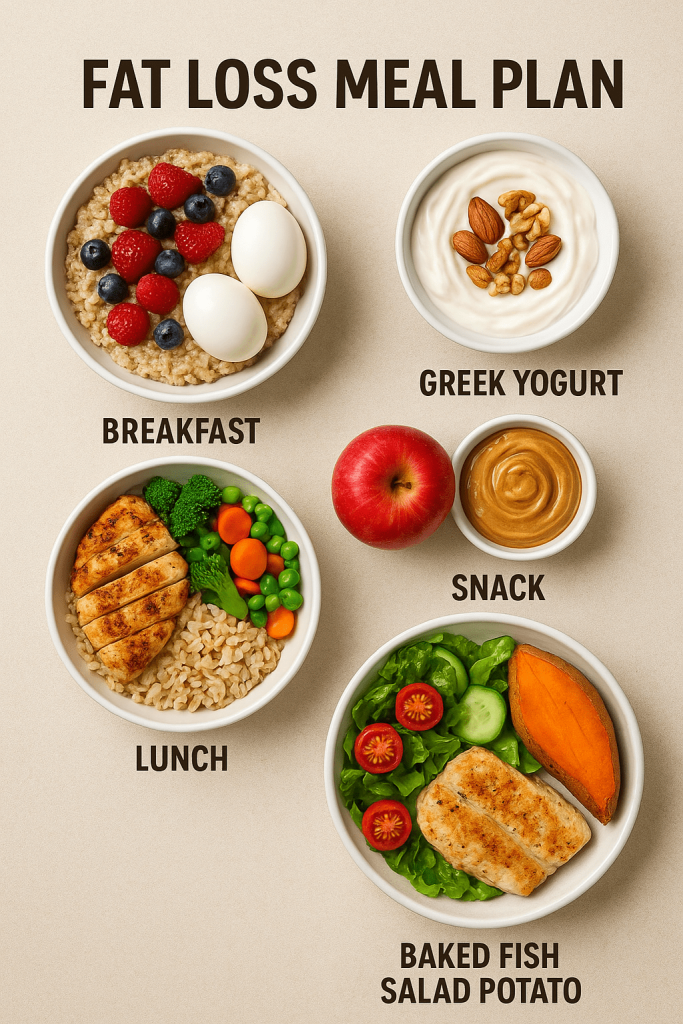
Sample Fat Loss Meal Plan
- Breakfast: Oats with berries + boiled eggs
- Snack: Greek yogurt with nuts
- Lunch: Grilled chicken, brown rice, mixed vegetables
- Snack: Apple + peanut butter
- Dinner: Baked fish with salad and sweet potato
Lifestyle Factors That Boost Fat Loss
- Exercise: Combine strength training (to keep muscle) and cardio (to burn calories).
- Sleep: 7–9 hours supports metabolism and appetite control.
- Stress Management: High stress increases cravings and fat storage.
Common Mistakes to Avoid
- Cutting calories too low (slows metabolism).
- Relying on “fad diets” or extreme restrictions.
- Ignoring protein and eating only salads.
- Drinking high-calorie beverages (soda, alcohol, sugary coffee drinks).
Final Thoughts
A fat loss diet should be balanced, flexible, and sustainable. Focus on whole foods, enough protein, and moderate portions. Combine this with regular exercise, proper sleep, and hydration for the best long-term results.