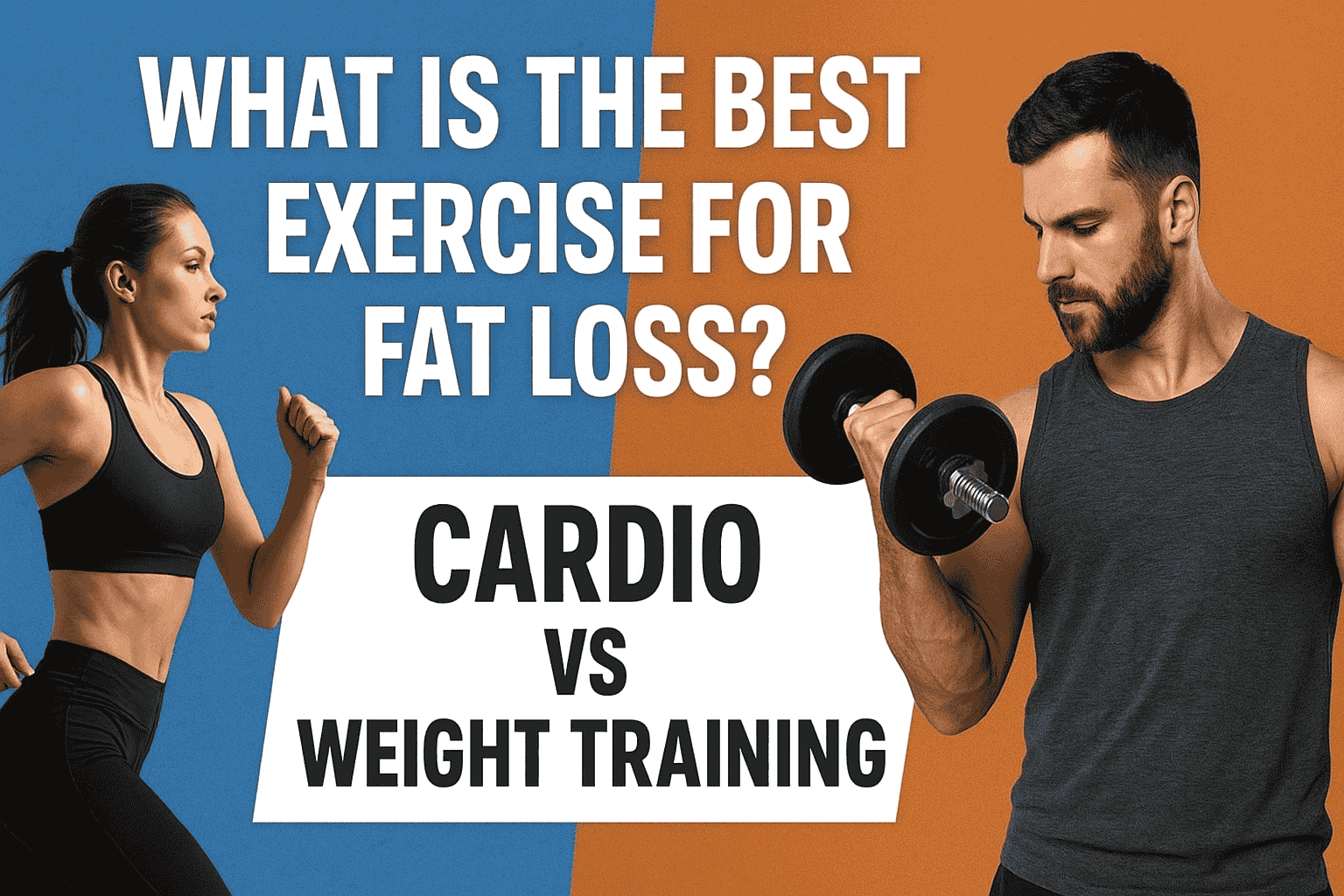
Losing fat is one of the most common fitness goals, but there’s always one big question: What’s better for fat loss—cardio or weight training?
While both forms of exercise burn calories and improve overall health, they work in different ways. Understanding how each impacts your metabolism, muscle mass, and long-term fat loss can help you make smarter choices for your body and goals.
Let’s dive deep into the cardio vs. weight training debate to uncover which one truly helps you lose fat faster—and keep it off.
Understanding Fat Loss: The Science Behind It
Before we compare cardio and weight training, it’s important to understand how fat loss actually works. Fat loss occurs when you’re in a calorie deficit—meaning you burn more calories than you consume. This deficit forces your body to use stored fat for energy. While diet plays the biggest role (around 70–80% of fat loss), the right type of exercise helps you burn more calories and improve body composition.
Cardio for Fat Loss: The Classic Approach
What Is Cardio?
Cardio (short for cardiovascular exercise) includes activities that elevate your heart rate for an extended period—like running, cycling, swimming, or brisk walking.
How Cardio Helps You Lose Fat
Cardio primarily burns calories during the workout itself. The more intense and longer your session, the more calories you burn.
- A 150-pound person burns approximately 300 calories jogging for 30 minutes.
- The same person might burn 250 calories cycling moderately for 30 minutes.
These workouts directly contribute to your calorie deficit, leading to fat loss over time.
Benefits of Cardio for Fat Loss
- Burns a large number of calories quickly
- Improves heart and lung health
- Reduces stress and boosts mood (thanks to endorphins)
- Can be done without equipment (walking, jogging, skipping)
Best Cardio Workouts for Fat Loss
- High-Intensity Interval Training (HIIT): Short bursts of intense exercise followed by rest; burns calories during and after exercise.
- Running or Jogging: Great for overall endurance and calorie burn.
- Cycling or Rowing: Low-impact but highly effective for long sessions.
- Swimming: Full-body workout that engages multiple muscles.
The Downside of Cardio
Excessive cardio can sometimes lead to muscle loss if you’re not eating enough protein or strength training. And since muscle burns more calories at rest, losing muscle can slow your metabolism—making long-term fat loss harder.
Weight Training for Fat Loss: The Metabolic Advantage
What Is Weight Training?
Weight training (or resistance training) involves exercises that make your muscles work against resistance—like dumbbells, barbells, or bodyweight.
How Weight Training Promotes Fat Loss
While cardio burns calories during exercise, weight training continues to burn calories after your workout. This phenomenon is called EPOC (Excess Post-Exercise Oxygen Consumption), also known as the “afterburn effect.”
Benefits of Weight Training for Fat Loss
- Builds lean muscle mass, which boosts metabolism
- Enhances body shape and tone
- Strengthens bones and joints
- Improves insulin sensitivity, helping regulate fat storage
A 2015 study published in the Journal of Applied Physiology found that individuals who performed resistance training lost more body fat and preserved lean muscle compared to those who only did cardio.
Example of Weight Training for Fat Loss
A balanced routine might include
- Squats and Deadlifts (target lower body and core)
- Bench Press and Rows (build upper body strength)
- Planks and Lunges (engage stabilizer muscles)
Combining these compound movements helps you burn more calories while strengthening multiple muscle groups at once.
Cardio vs. Weight Training: Which Is Better for Fat Loss?
| Factor | Cardio | Weight Training |
| Calories Burned (During Exercise) | High | Moderate |
| Calories Burned (After Exercise) | Low | High (EPOC effect) |
| Muscle Preservation | Low | High |
| Metabolic Boost | Temporary | Long-term |
| Overall Fat Loss Efficiency | Good (short term) | Excellent (long term) |
Expert Insights
- According to the American College of Sports Medicine (ACSM), combining cardio and resistance training leads to the greatest improvements in body composition.
- A meta-analysis published in Sports Medicine found that individuals who performed both types of exercise had greater fat loss and improved fitness levels compared to those who did either alone.
- Certified personal trainers often emphasize progressive overload in weight training and varied cardio intensity for optimal fat loss.
Common Mistakes to Avoid
- Doing only cardio and neglecting strength training
- Not eating enough protein during fat loss
- Overtraining without proper recovery
- Ignoring sleep and hydration
Remember: Exercise alone isn’t enough—your nutrition, sleep, and stress management play equally crucial roles in achieving long-term fat loss.
Conclusion: The Best Fat-Loss Exercise is the One You Can Sustain
So, which is best for fat loss—cardio or weight training? The truth is, both are powerful tools when used together.
- Cardio helps create a calorie deficit and improves heart health.
- Weight training builds lean muscle and boosts metabolism.
The real secret to fat loss lies in consistency, balance, and smart nutrition.
If you want long-term results, don’t choose one over the other—combine cardio and strength training for the ultimate fat-burning routine.
Take Action Today
Start by setting small, realistic goals. Add two strength sessions and two cardio workouts this week. Track your progress, stay consistent, and fuel your body with nutritious food.
Soon, you’ll not only lose fat—you’ll also build a stronger, leaner, and healthier body that lasts a lifetime.